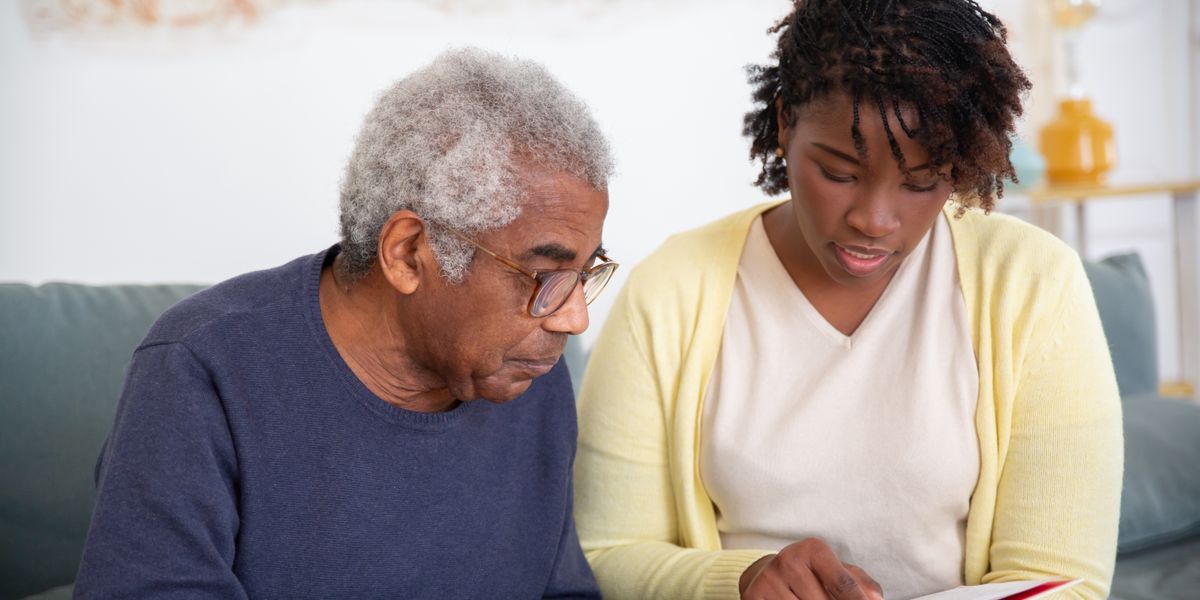
The hardest part of a caregiver's job often isn't the lifting or the schedule. It's walking into a room to do something intimate — a bath, a dressing change, a medication — for a person who, to them, is still mostly a stranger. And the resident feels it too: a kind stranger is still a stranger. The distance is uncomfortable for everyone, and in dementia care it can tip a routine task into agitation and refusal.
Closing that distance is the entire premise of person-centered care, the documented standard across senior living.1 But "be person-centered" is advice, not a tool. The tool is knowledge the caregiver can actually carry into the room — and that's what Porchlight produces, almost as a byproduct of letting residents talk about themselves.
A relationship needs raw material. "How are we today?" has none. "Is it true you built your own sailboat?" has all of it.
One detail changes the whole encounter
Think about the difference a single fact makes. A caregiver who knows that Mr. Alvarez spent forty years as a high-school band director doesn't say "Let's get you dressed." They say, "I heard you ran the marching band — did you do the half-time shows?" Now Mr. Alvarez is animated, telling a story, hands moving like he's conducting. The dressing happens almost incidentally, in the slipstream of a conversation he's enjoying. The task got easier because the relationship got warmer.
This is not a personality trick that only naturally gifted aides can pull off. It's a knowledge problem. The warm, "natural" caregiver is usually just the one who happened to learn something about the resident. Porchlight gives that advantage to everyone on the floor — including the float staff, the new hire, and the weekend agency aide who has never met the resident before.
The dossier is the deliverable
Behind every resident in Porchlight is a profile that grows with each interview session: where they grew up, what they did for work, who they loved, what they're proud of, and what makes them laugh. A caregiver can glance at it before a shift the way a good host glances at a guest list. Five minutes of reading; a completely different encounter.
Why this matters most in dementia care
For residents living with dementia, anchoring conversation in long-term, emotionally positive memories — the wedding, the children, the old neighborhood — is a recognized, gentle way to connect, because remote memory often remains accessible after recent memory fades. Steering toward those happy, well-worn stories during care tasks can ease distress and build trust. Reminiscence isn't a treatment, but having the right memory ready to reach for is real, practical help. 2
It survives turnover — the rapport doesn't reset
Senior-care staffing turnover is famously high, and every departure normally takes hard-won resident knowledge with it. The aide who finally figured out how to calm a particular resident leaves, and the next person starts from zero. That reset is one of the quiet, expensive costs of turnover that never shows up on a spreadsheet.
When the knowledge lives in Porchlight instead of in one person's head, it stays. A brand-new caregiver opens the resident's profile on their first shift and walks in already knowing three things worth talking about. Rapport that used to take weeks to rebuild after every departure is available on day one. You're not just building relationships — you're making them institutional.
What it does for the caregiver, too
There's a second beneficiary here that's easy to overlook: the caregiver. Direct-care work is emotionally heavy and chronically under-recognized, and a major source of meaning in it is genuine human connection with residents. When every interaction is a transaction with a near-stranger, the job grinds. When interactions are real conversations with people whose lives the caregiver actually knows and admires, the work feels like what drew people to it in the first place. Knowing your residents is a retention lever as much as a satisfaction one.
The same five minutes of story makes the resident feel seen, the task go smoother, and the caregiver's day feel like it mattered.
The honest bottom line
We're not going to claim a number for "rapport." What we'll claim is the chain, and it holds up: relationships need shared knowledge; Porchlight manufactures that knowledge from residents' own stories; and it puts it in every caregiver's hands — including the ones who just started. Person-centered care stops being a poster on the wall and becomes the thing that actually happens when someone walks into the room.
Put a dossier in your caregivers' hands
We'll show you how a resident's stories become a profile any staff member can open before a shift.
Explore a live demo Book a demoSources & notes
- Centers for Medicare & Medicaid Services, Requirements for Long-Term Care Facilities (42 CFR Part 483); the Pioneer Network culture-change movement — both establishing person-centered/person-directed care as the standard of practice.
- Woods B, et al. Reminiscence therapy for dementia. Cochrane Database of Systematic Reviews, 2018. Benefits are modest and setting-dependent; Porchlight is an enrichment and connection tool, not a clinical intervention, and the "anchoring to positive remote memory" guidance reflects widely taught dementia-communication practice rather than a medical claim.
Resident scenarios are illustrative, not real named individuals. Porchlight does not fabricate customers, testimonials, or outcome metrics.