In May 2023, U.S. Surgeon General Dr. Vivek Murthy issued a formal advisory titled "Our Epidemic of Loneliness and Isolation," arguing that social disconnection is a public-health crisis with consequences as serious as more familiar risk factors. The advisory describes loneliness as widespread and associated with significant physical and mental health harms across the population.1
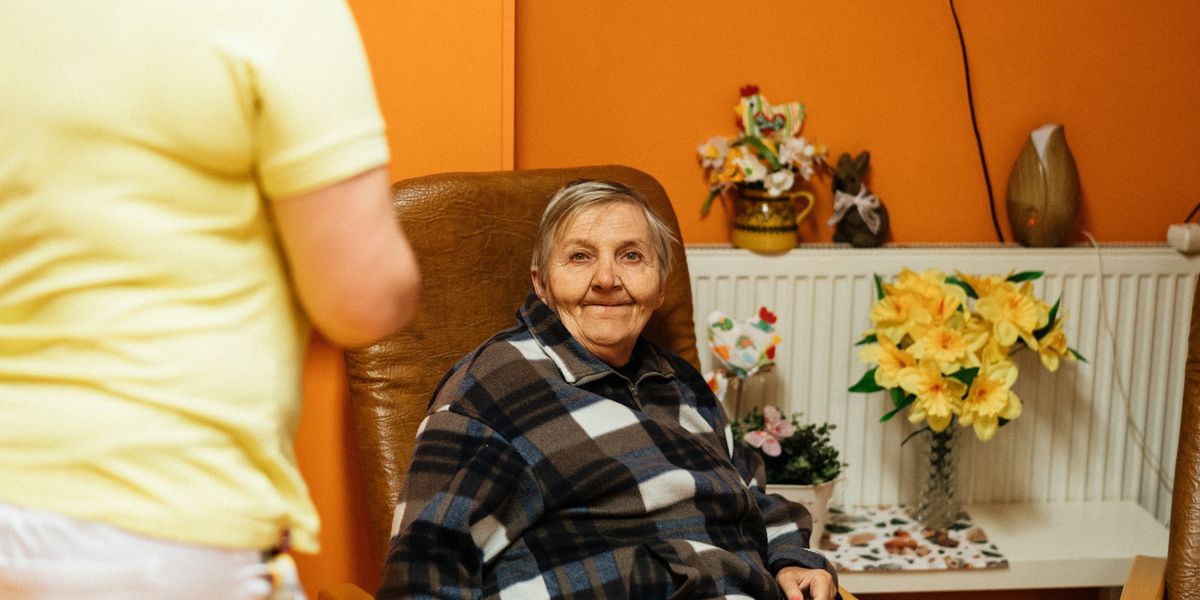
For anyone working in senior living, none of this is abstract. You watch it every day. A resident moves in after losing a spouse, a home, a driver's license, and a lifetime of daily contacts in a single hard season. The people who knew their whole story — the neighbors, the coworkers, the siblings — are gone or far away. They can be surrounded by kind staff and a full activity calendar and still feel profoundly, invisibly alone, because loneliness isn't the absence of people in the room. It's the absence of being known.
A resident can be cared for impeccably and still feel like no one in the building knows who they really are. That gap is where loneliness lives.
The specific loneliness of being un-storied
There's a particular grief that comes with age: the sense that your story is ending untold. You did remarkable, ordinary, human things — you served, you built, you raised children, you survived — and now you sit in a room where no one has the time to ask, and where you suspect no one would be interested anyway. The richest part of a person becomes invisible at exactly the moment they most need it seen.
This is the gap Porchlight was built around. Not a louder activity. Not more television. The simple, profound act of asking an older person about their life, and actually listening.
Why "tell me your story" is a real intervention
The advisory's recommendations center on strengthening social connection in everyday settings.1 And the research on reminiscence — the structured recall of one's life — points the same direction: inviting older adults to revisit and share meaningful memories is associated with modest improvements in mood, communication, and quality of life.2 The mechanism is human and obvious. When someone asks about your life and pays attention to the answer, you are, in that moment, the opposite of alone. You are connected, valued, and known.
Porchlight's resident app is designed to deliver that experience reliably, with dignity, to people who are often left out of technology entirely:
- One big button, large type, read aloud. Accessible to residents who can't see well, can't read easily, or have never used a tablet.
- No rush. A resident can pause, take their time, or skip a question with one tap. Nothing is graded and nothing is a test.
- Questions that feel personal. It never repeats a question they've answered, and family can add questions and photos of their own, so the conversation is about this person rather than a script.
- An ongoing relationship. With more than 800 questions across a whole life, there is always a fresh one waiting — so it's a standing conversation, not a one-time interview.
Connection that reaches past the building
Loneliness in senior living is also family loneliness — the adult child who can't be there and feels the distance every day. Porchlight's Family Relay closes part of that gap: loved ones receive their parent's new stories and can send warm voice messages back. A resident hearing "I loved that story, Dad" in their daughter's actual voice is the Surgeon General's recommendation, made concrete.
What this means for a community
Senior-living communities are increasingly expected — by families, by referral sources, and by their own mission — to take resident well-being and social connection seriously, not just resident safety. The loneliness advisory gives that expectation a name and a national mandate. A community that can say, credibly, "here is the specific, daily thing we do to make sure every resident is known and connected," has both a better home and a stronger story to tell families and referral partners.
Porchlight is that specific, daily thing. It's a porch light left on for each resident — a small, steady signal that says we expect you, we're interested in you, you are not forgotten.
The honest bottom line
We won't overstate it. Porchlight is not a medical treatment for loneliness, and we cite the Surgeon General's advisory and the reminiscence literature for what they actually say, not for what would sound impressive.12 But the core idea needs no exaggeration: the antidote to feeling unknown is being asked, and heard, and remembered. That is precisely what Porchlight does, every day, for every resident — and it connects them back to the families who love them. In an epidemic of disconnection, that is not a small thing.
Leave the light on for your residents
See how the resident app and Family Relay turn "tell me your story" into a daily habit.
Explore a live demo Book a demoSources & notes
- U.S. Surgeon General. Our Epidemic of Loneliness and Isolation: The U.S. Surgeon General's Advisory on the Healing Effects of Social Connection and Community. U.S. Department of Health & Human Services, 2023.
- Woods B, O'Philbin L, Farrell EM, Spector AE, Orrell M. Reminiscence therapy for dementia. Cochrane Database of Systematic Reviews, 2018. Effects are described as modest and setting-dependent; Porchlight is an enrichment and connection tool, not a clinical treatment for loneliness or dementia.
Resident and family scenarios are illustrative, not real named individuals. Porchlight does not fabricate customers, testimonials, or outcome metrics.